

If you’ve ever had contaminated fuel, blocked filters, or wondered how to safely transfer diesel between your tanks, you’ll know how important a reliable fuel management system is.
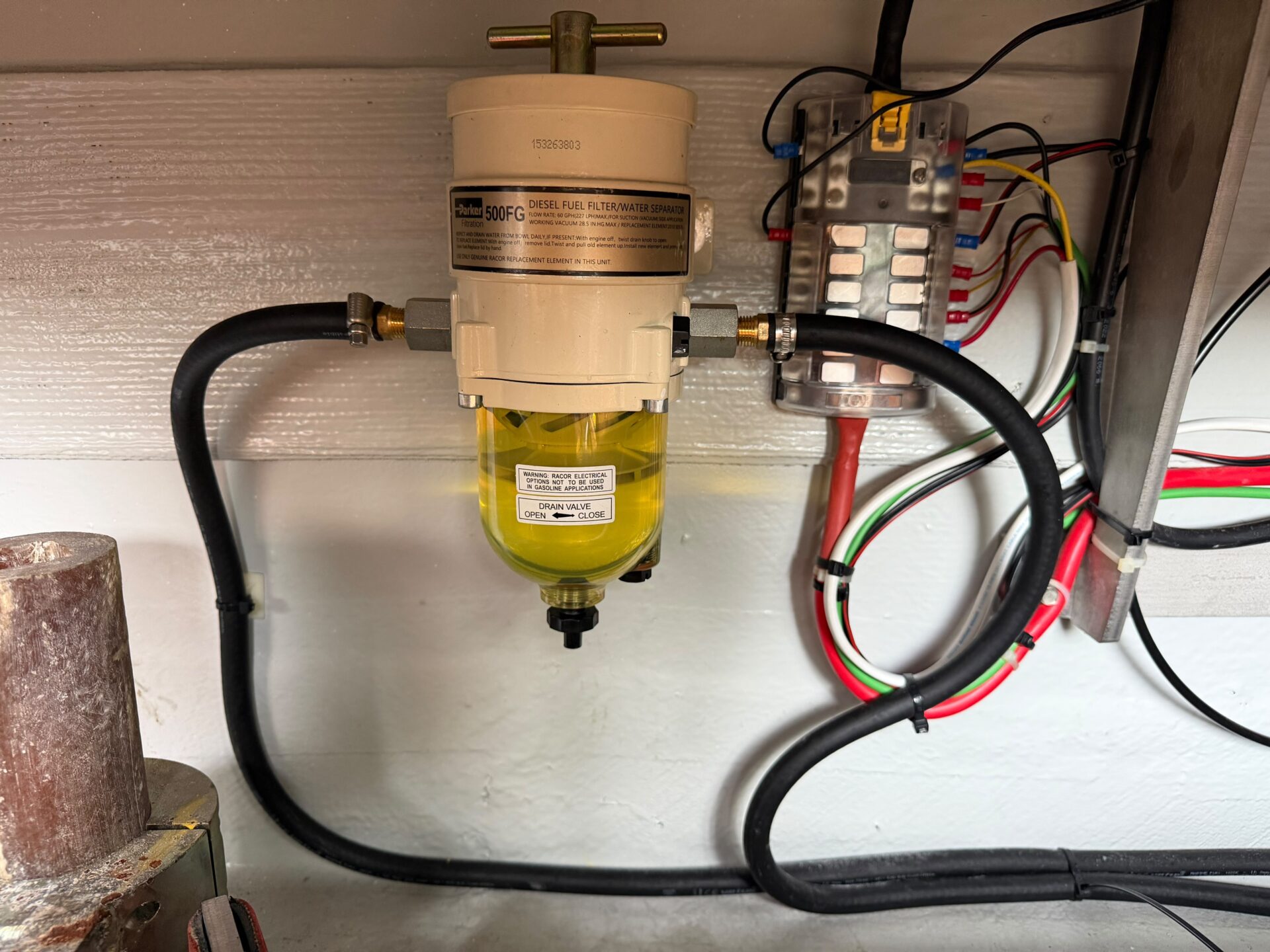
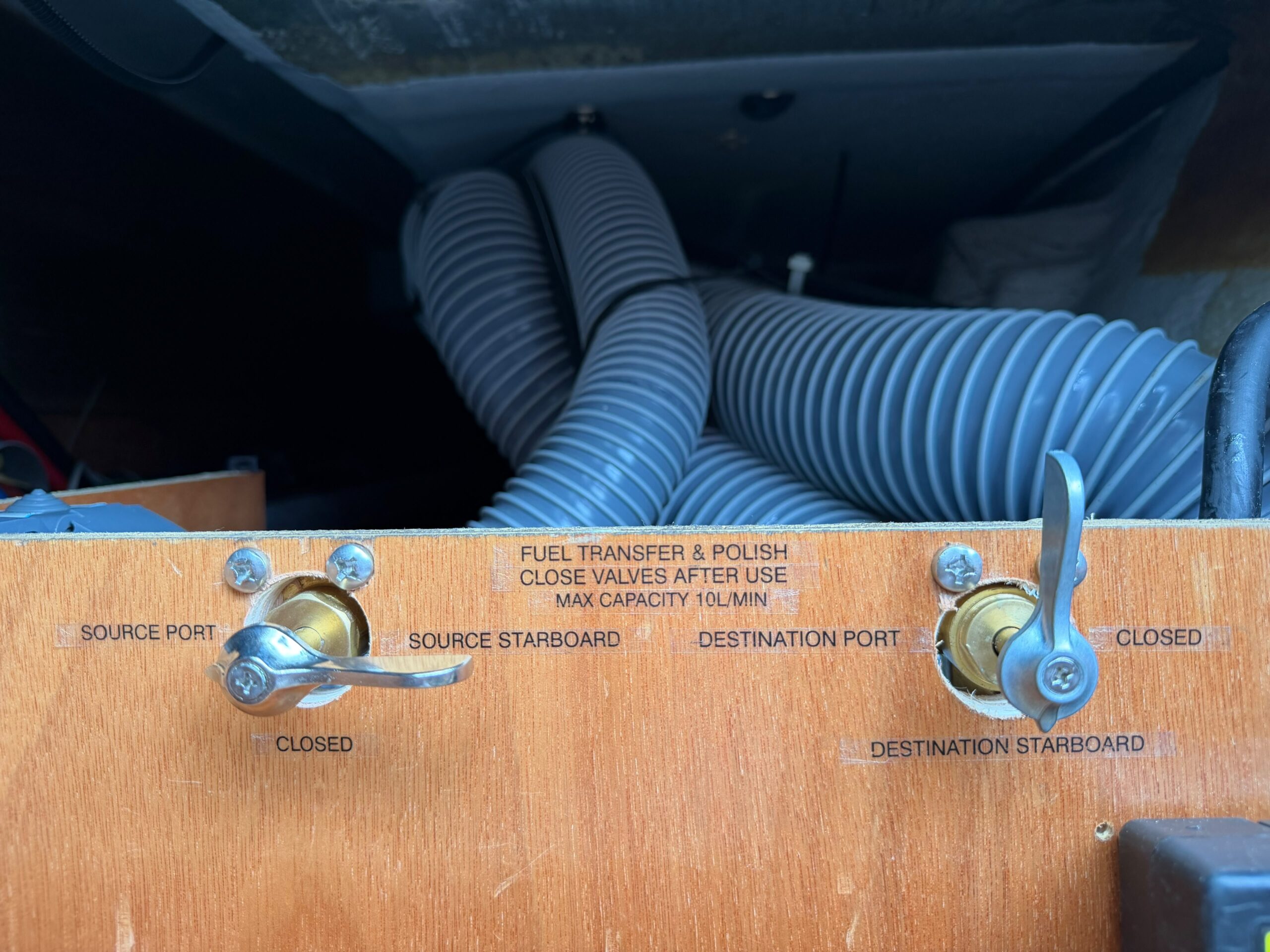
In this video I’ll show you the fuel transfer and polishing system I installed on our Lagoon 450. The design is simple, compact, and built entirely around the existing fuel system, allowing me to polish fuel in either tank, transfer fuel between tanks, or supply the polishing system from either side—all without permanently modifying the engines’ normal operation.
I’ll explain how the valves are configured, how the fuel flows through the system, and why each component was chosen. By the end of this video you’ll understand exactly how the system works and how it helps keep our fuel clean, balanced, and ready for long passages.
SCENE 1 — normal engine operation
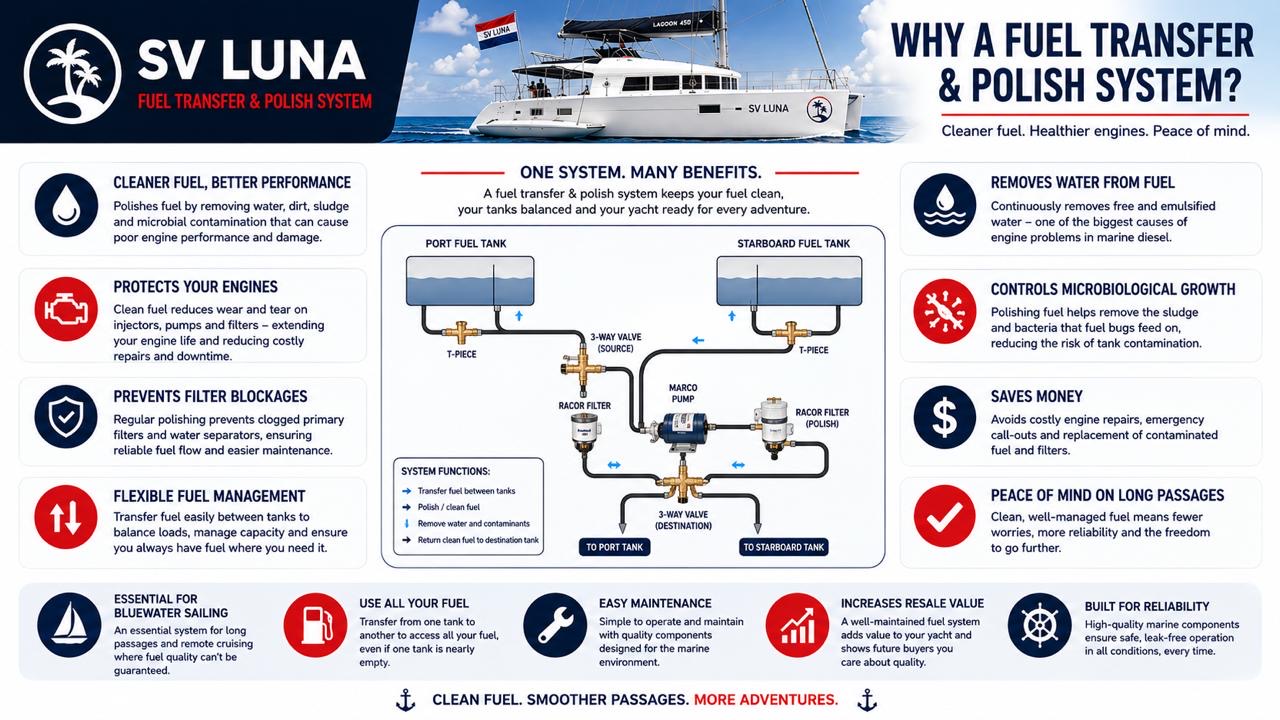
This is the normal operating mode of the SV Luna fuel system. The port engine draws fuel from the port tank, through its own Racor and Yanmar pre-filter. Return fuel from the port engine goes back to the port tank. On the starboard side, the same happens independently: the starboard engine uses the starboard tank. In this mode, both fuel systems remain fully separated.
SCENE 2 — Polish port tank
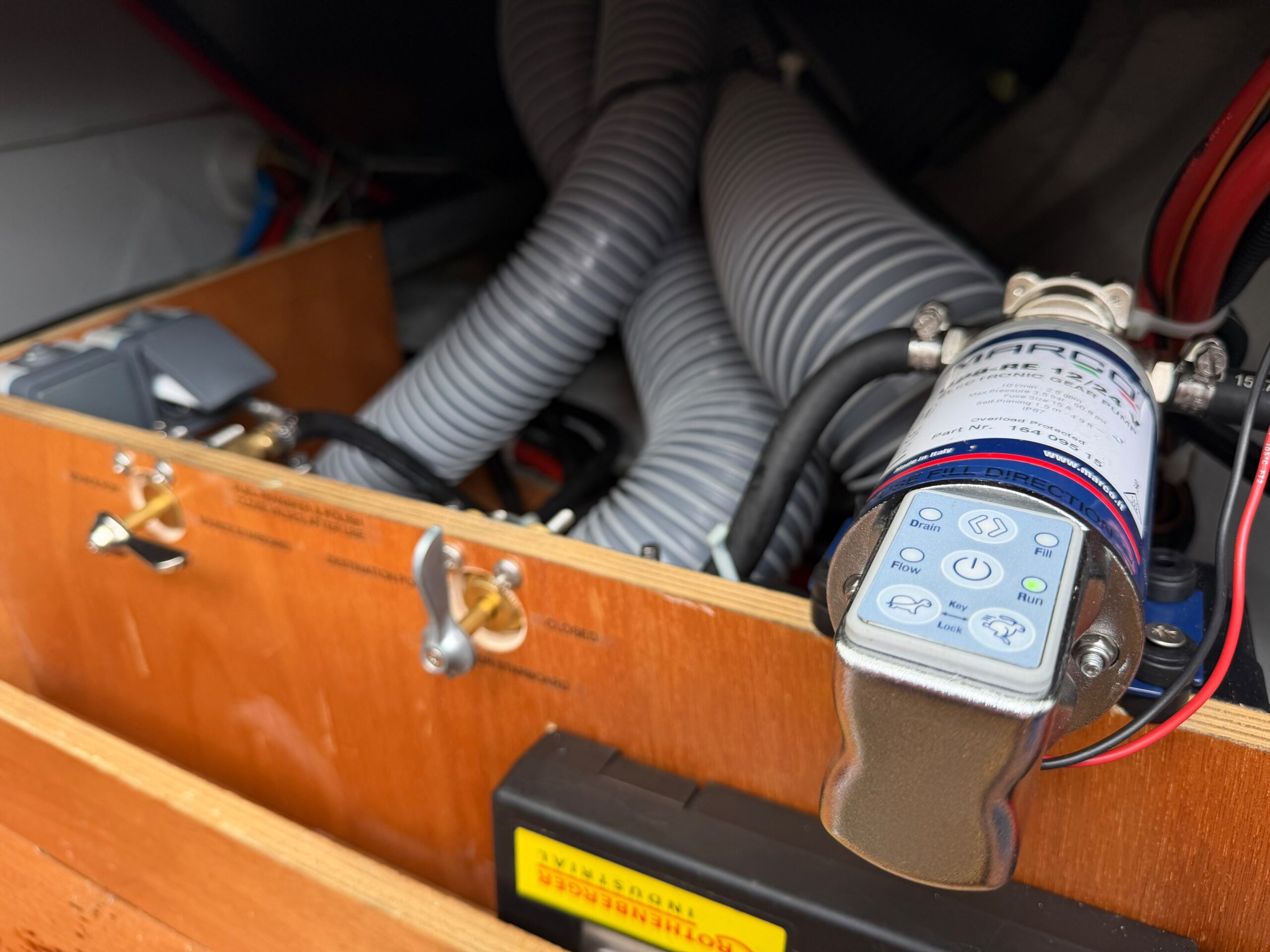
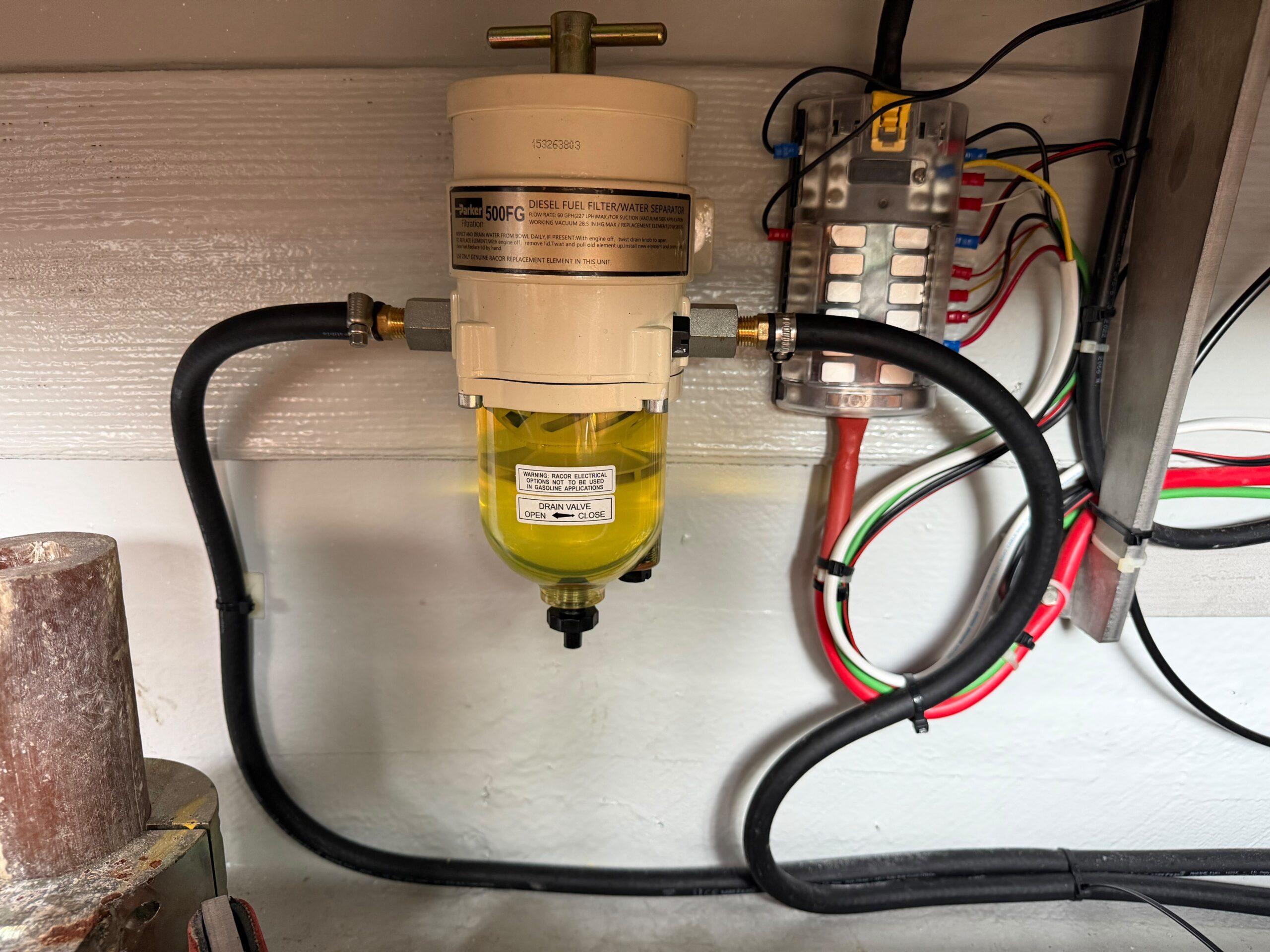
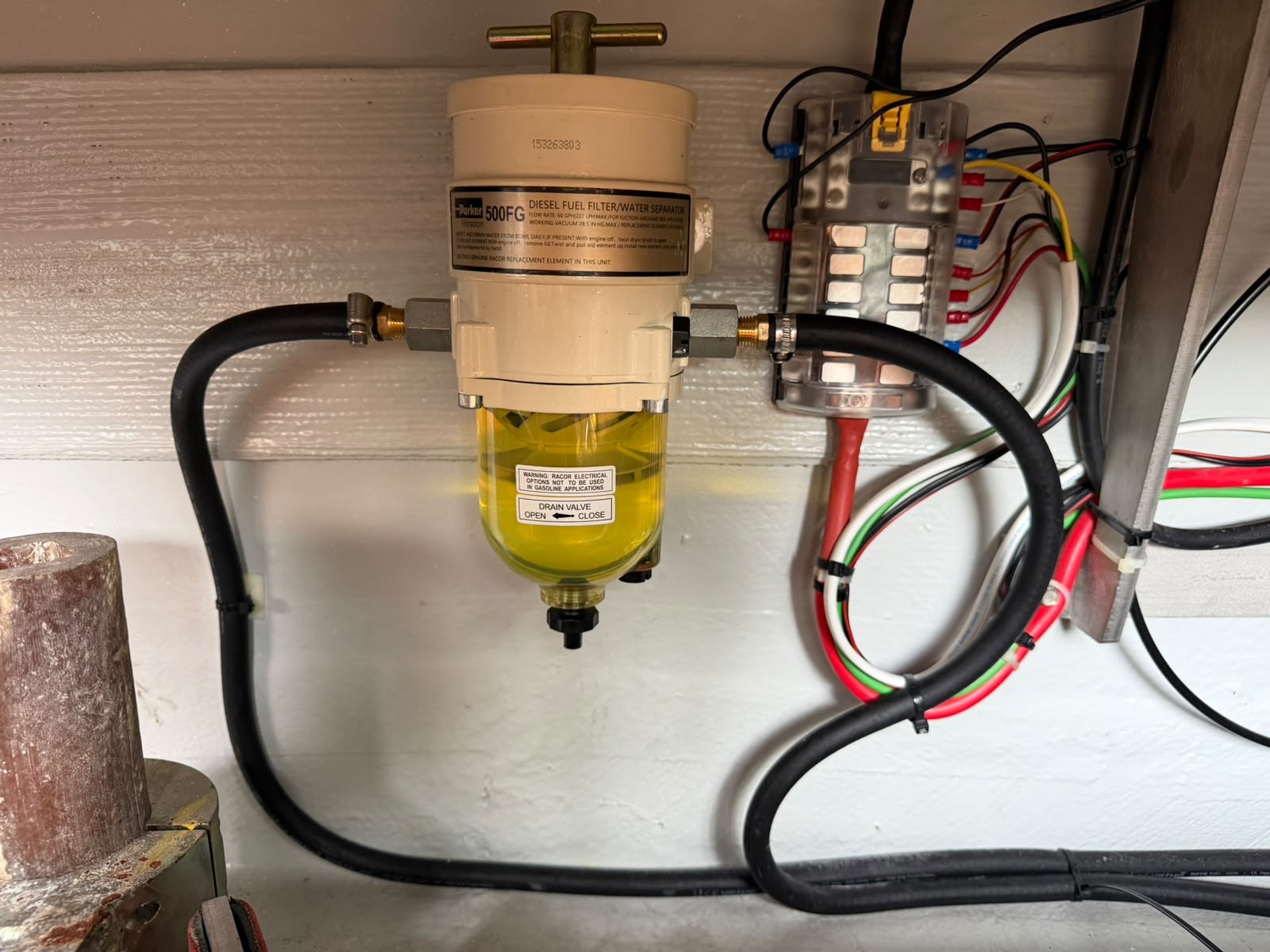
To polish the port tank, the source selector is set to port and the destination selector is also set to port. Fuel is drawn from the port tank at the source tee, then routed through the source selector. From there, it passes through the Racor polishing filter and the Marco gear pump. The destination selector sends the cleaned fuel back to the port return tee and into the port tank. This cleans the port tank without changing the fuel balance.
SCENE 3 — Polish starboard tank
The same principle applies to the starboard tank. The source selector is set to starboard and the destination selector is also set to starboard. Fuel leaves the starboard tank via the source tee, flows through the polishing Racor and Marco pump, and returns through the starboard return tee. This allows the starboard tank to be cleaned independently.
SCENE 4 — Transfer port to starboard
For a filtered transfer from port to starboard, the source selector is set to port and the destination selector to starboard. Fuel is drawn from the port tank, passes the source tee, and enters the polishing circuit. After filtration and pumping, the destination selector routes the fuel to the starboard return tee. The fuel then enters the starboard tank. This means fuel is not only transferred, but also polished during the transfer.
SCENE 5 — Transfer starboard to port
The system can also transfer in the opposite direction. With the source selector set to starboard and the destination selector set to port, fuel is drawn from the starboard tank and filtered through the polishing circuit. The destination selector then routes the clean fuel to the port return tee and into the port tank. This gives SV Luna a flexible way to balance and clean fuel between both tanks.
SCENE 6 — Closing
In short: the engines can keep using their own tanks, while the polishing circuit can clean either tank, or transfer filtered fuel from one tank to the other. The key is always the combination of the source selector, the polishing circuit, and the destination selector.


Leave a reply